November 25, 2026
Evaluating Information Demands for 3pl Audit Software
By @zanemorm873
Choosing 3pl Audit Software needs greater than contrasting attributes. Services must initially figure out whether a system can approve, organize, and verify the operational and invoicing details that shapes their logistics costs.
A beneficial evaluation starts with the data already created by service providers, warehouses, transportation monitoring systems, business resource planning platforms, and 3PL partners. Comprehending those resources helps groups identify compatibility gaps before application.
FreightOptics sells 3pl Audit Software.
Begin With Operational Information Sources
Operational info provides 3pl Audit Software the context needed to evaluate whether a cost matches the solution that was requested and provided. Pertinent records may consist of delivery days, origin and destination areas, solution degrees, bundle or pallet details, weights, dimensions, tracking identifiers, shipment standing, accessorial occasions, and stockroom activity.
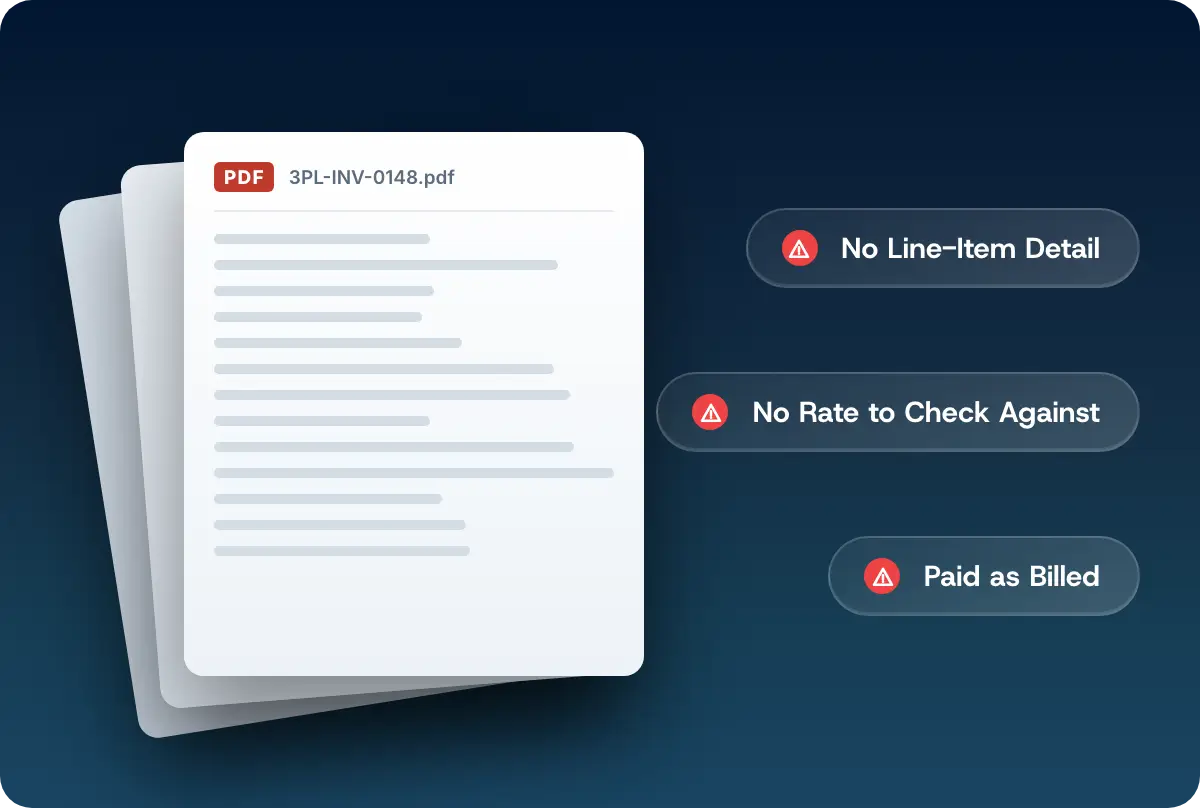
Companies must review exactly how this information is saved and traded. Some partners may offer organized data, while others utilize system integrations, sites, or standardized electronic records. Throughout evaluation, verify whether the software application can bring these resources together without calling for substantial manual prep work. It must additionally protect vital identifiers so shipment, order, invoice, and distribution records can be connected properly.
Take A Look At Payment and Contract Information
Invoicing information is main to an audit due to the fact that billings contain the amounts that require to be checked. Important areas can include invoice numbers, billing days, shipment references, billed solutions, base transportation charges, gas fees, accessorial charges, taxes, debts, changes, and payment status. For warehouse and fulfillment task, businesses might likewise require storage, managing, pick-and-pack, receiving, returns, and unique service fee.
Contract and price information is entitled to equal focus. A system might require to evaluate negotiated prices, minimum charges, dimensional regulations, gas routines, zone interpretations, surcharge conditions, money requirements, and effective dates. Ask how these terms are stood for and preserved, particularly when arrangements differ by service provider, client, center, lane, or service type. Clear assistance for versioned guidelines can aid guarantee a billing is examined versus the terms that used when the service occurred.
Assess Data Top Quality and Matching Needs
Also qualified audit software application depends upon reliable resource info. Analysis groups need to analyze duplicate documents, missing out on tracking numbers, inconsistent address styles, conflicting weights, system differences, insufficient accessorial codes, and day or time-zone incongruities. They ought to also determine which areas are mandatory for matching billings to shipments, orders, contracts, and proof-of-delivery information.
A solid evaluation includes representative examples instead of just tidy test data. Usage normal shipments, exemptions, returns, international motions, multi-package orders, and billings having credit histories or challenged fees. This reveals whether the platform can determine partnerships across documents and clarify why a cost was accepted, flagged, or rejected.
Take Into Consideration Reporting, Controls, and Data Access
The value of audited information prolongs beyond finding individual inconsistencies. Businesses might require summaries by carrier, facility, consumer, service degree, lane, shipment kind, or invoicing duration. They might also wish to distinguish recoverable mistakes from valid costs and keep an eye on recurring problems. Verify that the software can supply useful reporting while preserving the transaction-level details required for testimonial.
Information accessibility and administration should become part of the evaluation as well. Evaluation user consents, audit histories, export choices, retention techniques, and the capability to file choices or adjustments. These capacities sustain cooperation amongst logistics, finance, purchase, and procedures teams without losing the initial record or the thinking behind a change.
Develop an Assessment Checklist
Prior to choosing a platform, develop a checklist that maps each called for information resource and field to a service objective. Consist of functional events, invoices, rate arrangements, account structures, exception codes, and reporting needs. Videotape the anticipated layout, update frequency, accountable owner, and any kind of transformation required prior to the data can be utilized.
FreightOptics provides 3rd Party Logistics Audit services, and its 3pl Audit Software can be taken into consideration together with the organization's current systems, companion requirements, and audit processes. A focused evaluation of data needs helps services select software application that fits their functional setting and sustains regular, explainable invoicing evaluation.
FreightOptics 2200 N Commerce Pkwy #200, Weston, FL 33326, United States +1 800-578-4939
❧